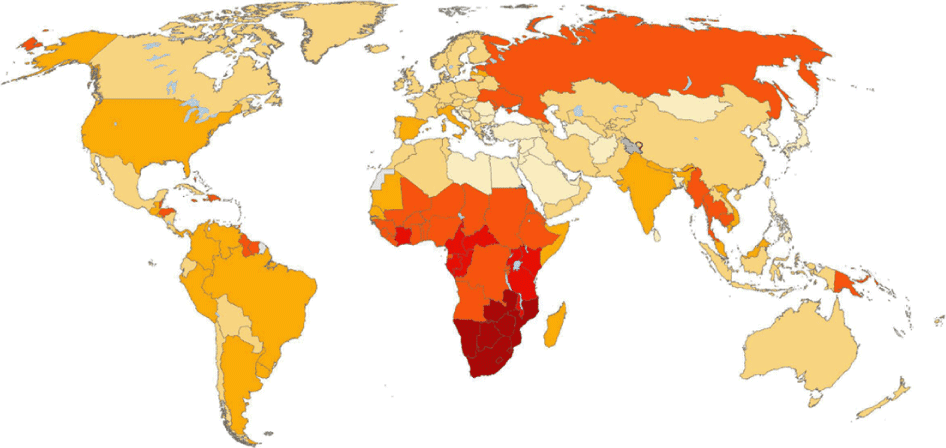
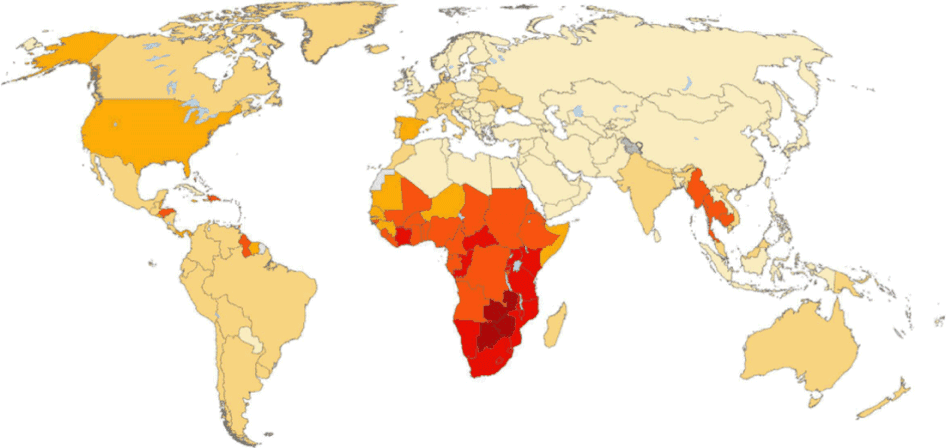
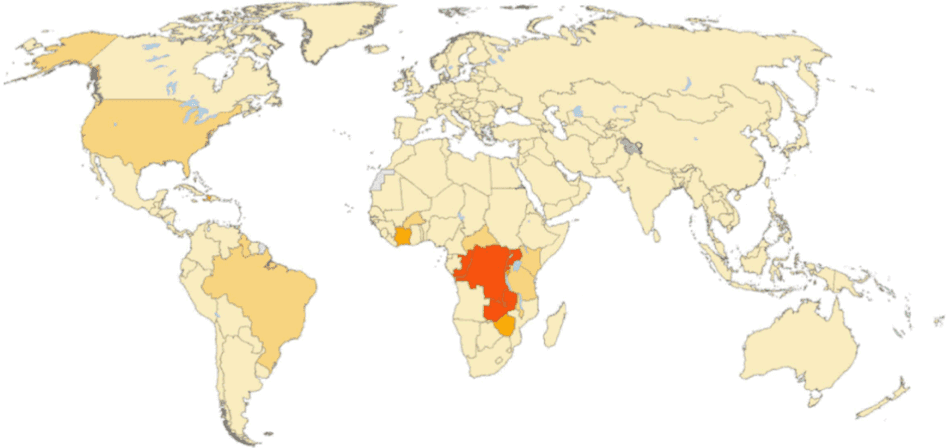
HIV History
The SIV (Simian immunodeficiency virus) has existed in monkeys and similar animals (gorillas, chimpanzees, etc.) for a long time. This virus is similar to HIV in monkeys and actually HIV has mutated from SIV.
Poor people in Africa have been hunting and eating wild animals like monkeys for many years. Many of them get SIV virus.
But the human immune system destroys this virus easily and clears it from the body within a few weeks.
1880
In the past, the human population in the whole world, including Africa, was much smaller than today. For example, it is estimated that the population of Africa was around 140 million people in 1900, but it reached more than 800 million people in 2000.This increase in population is the main cause of the spread of all infectious diseases such as HIV, tuberculosis, influenza and corona. Because these diseases spread with more contact between humans.
 Population growth in Africa after 1900
But population growth was not enough...
1884
Berlin conference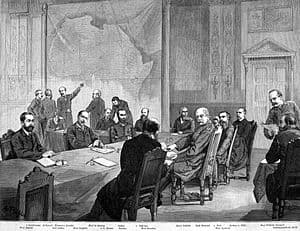 Berlin conference
European countries divided Africa among themselves at the Berlin Conference:
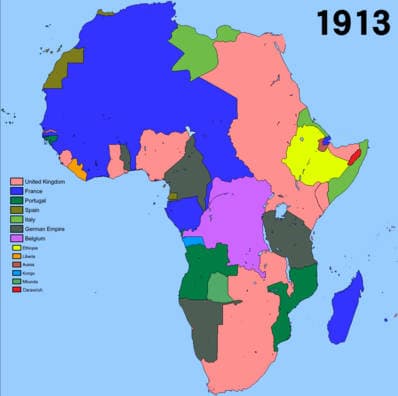
The red color for United Kingdom, the blue for France and...
With the arrival of Europeans in Africa, prostitution became popular among the poor people of Africa. This also increased the rate of HIV transmission.
1920
Researchers estimate that some time in the early 20th century, a form of Simian Immunodeficiency Virus found in chimpanzees (SIVcpz) first entered humans in Kinshasa (the capital of Congo) by the 1920s. This gave rise to the pandemic form of HIV (HIV-1 group M)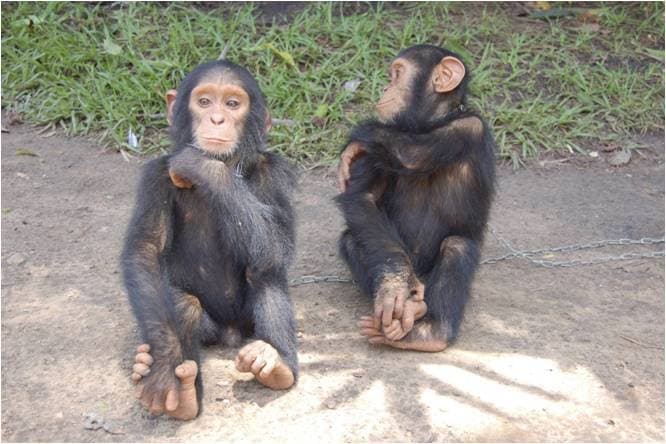 Chimpanzees in the Central African Republic
1939
A range of small scale Pneumocystis pneumonia epidemics occurred in northern and central European countries between the 1930s and 1950s, affecting children who were prematurely born.Pneumocystis pneumonia is caused by the fungus Pneumocystis and ususally is seen in people with AIDS.
The epidemics spread likely due to infected glass syringes and needles.
Malnutrition was not considered a cause, especially because the epidemics were at their height in the 1950s. At that time war torn Europe had already recovered from devastation.
Researchers state that the most likely cause was a retrovirus closely related to HIV (or a mild version of HIV) brought to Europe and originating from Cameroon, a former German colony. The epidemic started in the Free City of Danzig (at that time in Germany, now in Poland) in 1939 and then spread to nearby countries in the 1940s and 1950s, like Switzerland and The Netherlands.
1959
The first known case of HIV in a human occurs in a man who died in the Congo, later confirmed as having HIV infection (from his preserved blood samples).At this time, many Haitians were working in Congo, providing the opportunity for infection.
Genetic studies of the virus indicate that HIV-1 (M) first arrived in the Americas in the 1960s likely in Haiti or another Caribbean island.
On June 28, 1959, in New York City, Ardouin Antonio, a 49-year-old Haitian man dies of Pneumocystis pneumonia, a disease closely associated with AIDS. Some Researchers believe Ardouin probably had AIDS.
1964
synthesizes AZT under a grant from the US National Institutes of Health (NIH). AZT was originally intended as an anticancer drug.1966
HIV probably entered America at this time.Robert Rayford has been suggested to represent the earliest confirmed case of HIV/AIDS in North America.
But HIV was spreading secretly and no one noticed it until 12 years later.
1978
HIV infected thousands of gay men, and in 1978 its prevalence reached 5% among gay men living in New York and San Francisco.1979
While everyone thought this disease was only specific to gay men, one case of HIV transmission from mother to fetus has been confirmed.
American pediatrician James Olske and his colleagues reported this issue.
1980
First reported case in France1981
The first news story on "an exotic new disease" appeared May 18, 1981, in the newspaper New York Native. The disease called GRID, which stood for gay-related immune deficiency.First reported case in Spain
First known case reported in the United Kingdom
1982
The CDC started using the name AIDSFirst known case in Brazil.
First known case in Canada.
First known case in Australia
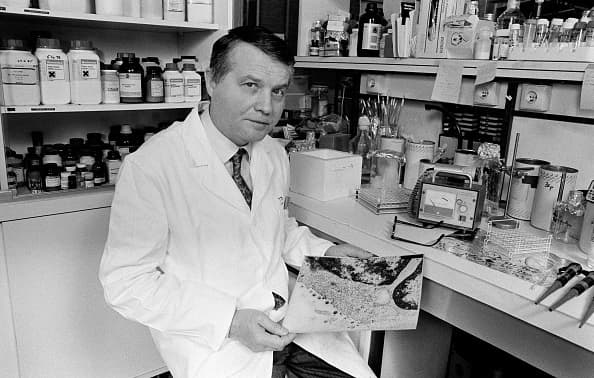 Luc Montagnier, co-discoverer of HIV
At France's Institut Pasteur (Pasteur Institute), a virologist named Luc Montagnier was asked to find the cause of this unknown disease.
1983
First known case in ColombiaFirst known case in Portugal.
Mr. Luc Montagnier, Ms. Françoise Barré-Sinoussi and their colleagues discovered the virus that causes AIDS. They named it lymphadenopathy-associated virus (LAV). This discovery brought them the Nobel Prize 27 years later.
1984
the first case of HIV infection in the Philippines was reported.Firsts known cases in Ecuador.
In America, a team led by medical biology researcher Robert Gallo was working on the AIDS virus.
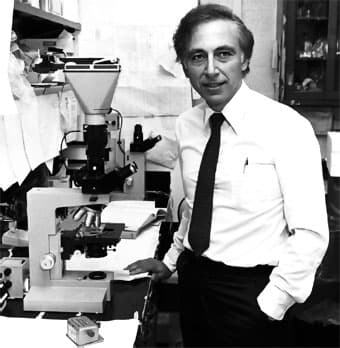 Robert Gallo
He discovered the virus and named it human T-lymphotropic virus (HTLV).
Gallo admitted in 1987 that the virus he claimed to have discovered in 1984 was in reality a virus sent to him from France the year before.
1985
the FDA approves a test as the first commercially available test for detecting HIV in blood.First officially reported cases in China.
First known case in Cuba.
"An Early Frost", the first film to cover the topic of HIV/AIDS is broadcast in the U.S.
Further research showed that the viruses discovered by Luc Montagnier's and Robert Gallo's groups were actually the same, and the name "Human Immunodeficiency Virus (HIV)" was given to them.
All HIV viruses were of the same type until...
Somewhere far from the west, in Africa, Senegalese microbiologist Dr. Souleymane Mboup, who was only 2 years after his graduation, was researching prostitutes in the city of Dakar (the capital of Senegal in Africa).
 Souleymane Mboup
When the blood samples collected by Souleymane's team were examined by Harvard University, they were surprised!
They had discovered an HIV virus that was more similar to SIV (Simine Immunodeficiency Virus) than to HIV-1 (the common HIV virus that came from chimpanzees to humans). Yes, they had discovered the HIV-2 virus.
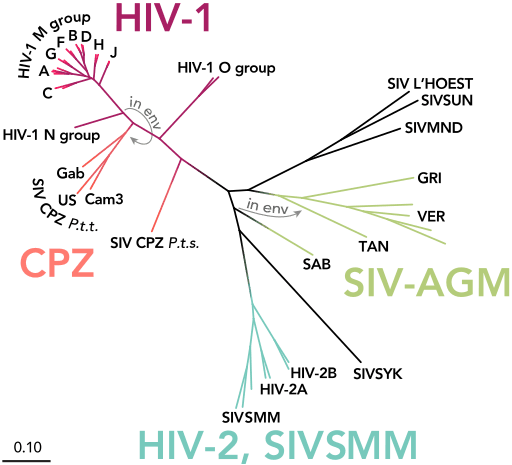 HIV SIV genetic tree
You can see in the photo that the HIV virus has mutated many times.
The black color is SIV (simian immunodeficiency virus) which all viruses have mutated and branched from it.
The red color of SIV-CPZ is the simian immunodeficiency virus, the chimpanzee version, and the purple color is the branch of HIV-1, which itself is divided into other subtypes. Subtype M was transmitted from chimpanzees to humans, and subtype O was transmitted from gorillas to humans.
 Sooty Mangabey
On the other side, at the bottom of the image (the blue line) there is SIV-SMM (simian immunodeficiency virus, Sooty Mangabey monkey branch) which HIV-2 is mutated from it.
Of course, HIV-2 has a lower transmission speed and disease severity than HIV-1. In total, about 5% of HIV cases are type 2, which is mostly found in Africa.
Did you pay attention? We humans got a virus from the three origins of chimpanzees, gorillas and sooty mangabeys, which has become a type of HIV in our bodies. Therefore, the transmission of HIV from animals to humans did not happen once, it happened at least 3 times and of course it will not be the last time either.
This means that at any time another virus may be transmitted from animals to humans, and perhaps this time much more dangerous than HIV-1.
1986
HIV (human immunodeficiency virus) is adopted as name of the retrovirus that was first proposed as the cause of AIDS by Luc Montagnier of France, who named it LAV (lymphadenopathy associated virus) and Robert Gallo of the United States, who named it HTLV-III (human T-lymphotropic virus type III)"one million Americans have already been infected with the virus and that this number will jump to at least 2 million or 3 million within 5 to 10 years." - NIAID Director Anthony Fauci (NIAID = US National Institute of Allergy and Infectious Diseases)
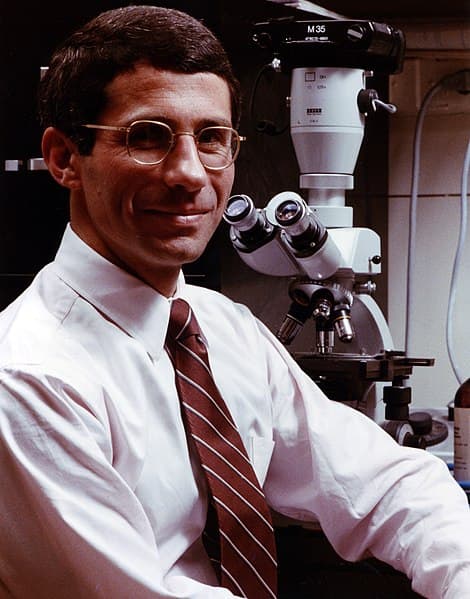 Anthony Fauci
Later Anthony Fauci became Chief Medical Advisor to the President Trump and Biden.
 Anthony Fauci
First officially known cases in the Soviet Union.
First officially known cases in India.
1987
AZT (zidovudine), the first antiretroviral drug, becomes available to treat HIV.First known case in Nicaragua.
1988
December 1, The first World AIDS Day takes place.1991
NBA star Magic Johnson publicly announces that he is HIV-positive. Magic Johnson a year after announcement in 1992 NBA All-Star Game
His bravery in making this announcement was widely admired. He played several years after HIV announcement this inspired a lot of HIV-positive people.

In 1994, 3 years after HIV announcement, hugging Diego Maradona
1992
The first combination drug therapies for HIV are introduced.1996
HIV resistance due to the CCR5 discovered. A Gene that is responsible for partial (10% of humans) or apparently complete (1% of humans) inborn resistance to HIV.1997
Experts believed that as many as 1.5 million people carried the virus in US.2000
World Health Organization estimates between 15% and 20% of new HIV infections worldwide are the result of blood transfusions.2001
FDA licenses the first test systems intended for screening of blood and plasma donations.2002
The Food and Drug Administration (FDA) approves the first rapid diagnostic HIV test kit for use in the United States. The kit has a 99.6% accuracy and can provide results in as little as twenty minutes.2005
The CDC recommends anti-retroviral post-exposure prophylaxis for people exposed to HIV. This treatment should start no more than 72 hours after a person has been exposed to the virus, and the drugs should be used by patients for 28 days.This emergency drug treatment had been recommended since 1996 for health-care workers.
A highly resistant strain of HIV linked to rapid progression to AIDS is identified in New York City.
2006
SIV found in gorillas.2007
The first case of someone being cured of HIV is reported. Timothy Ray Brown is a San Francisco man, with leukemia and HIV. He is cured of HIV through a bone marrow transplant in Germany from a homozygous CCR5 donor.2008
Françoise Barré-Sinoussi and Luc Montagnier were awarded the 2008 Nobel Prize in Physiology or Medicine for their "discovery of human immunodeficiency virus", but Gallo was left out. Winners of Nobel Prize in Physiology or Medicine (2008):
from left, Luc Montagnier, Françoise Barré-Sinoussi and Harald zur Hausen (the discoverer of HPV (human papilloma virus))
Montagnier said he was "surprised" Gallo was not recognized by the Nobel Committee: "It was important to prove that HIV was the cause of AIDS, and Gallo had a very important role in that. I'm very sorry for Robert Gallo."

2010
Confirmation is published that the first patient cured of HIV, Timothy Ray Brown, still has a negative HIV status, four years after treatment.2012
The Food and Drug Administration (FDA) approves Truvada for pre-exposure prophylaxis (PrEP). The drug can be taken by adults who do not have HIV, but are at risk for the disease.2013
A New York Times article says that 12 people of 75 who began combination antiretroviral therapy soon after becoming infected may have been "functionally cured" of HIV according to a French study.A functionally cured person will not experience an increase of the virus in the bloodstream despite stopping antiretroviral therapy, and therefore not progress to AIDS.
2014
Former International AIDS Society president Joep Lange and other HIV/AIDS researchers were killed in the Malaysia Airlines Flight.2015
A new, aggressive strain of HIV discovered in Cuba. Researchers in Belgium say the HIV strain CRF19 can progress to AIDS within two to three years of exposure to virus. Typically, HIV takes approximately 10 years to develop into AIDS.2016
The United Nations General Assembly's Political Declaration on Ending AIDS committed countries to the 90-90-90 targets by 2020.Researchers have found that almost 2,000 patients with HIV failed to respond to the antiviral drug known as Tenofovir. Tenofovir is the main HIV drug treatment.
2017
The United Nations holds its 2016 High-Level Meeting on Ending AIDS. The countries involved, the member states of the United Nations, pledge to end the AIDS epidemic by 2030.2019
A second patient is reported to be cured of HIV/AIDS using the same cell therapy approach that cured the first patient of HIV/AIDS.2020
Montagnier promoted the conspiracy theory that SARS-CoV-2 was deliberately created and escaped from a laboratory. Such a claim has been rejected by other virologists.He has been criticised by other academics for using his Nobel prize status to "spread dangerous health messages outside his field of knowledge".
2021
Conspiracy theorists' influence reached a peak in 2021 with Brazilian president Jair Bolsonaro claiming that COVID vaccines can lead to AIDS. The Supreme Federal Court of Brazil ordered an investigation into Bolsonaro for falsely claiming that COVID vaccines could increase the risk of contracting AIDS.2022
The site "hivhiv.ir" was born. I think you will all agree that this event is the most important event about HIV. :-)Sources: Wikipedia - Timeline of HIV/AIDS / Wikipedia - Africa / Wikipedia - Berlin Conference / Wikipedia - Wildlife of the Central African Republic / c-span / nobelprize / Wikipedia - Sooty mangabey / Wall Street Journal / Wikimedia / Wikipedia - Subtypes of HIV / Facebook - Le Quotidien / Wikipedia - Anthony Fauci / tvovermind / Wikipedia - Magic Johnson / Wikipedia - Luc Montagnier / Wikipedia - Robert Gallo

Related Contents
Let's use "lives with HIV" instead of "infected with HIV"Anti RetroViral Drugs